
Landscape Lighting Maintenance:
What Changes Over Time
Nobody calls because their outdoor lighting stopped working.
They call because one evening they walked outside, looked at the garden, and something felt off — and they couldn’t say what. The system is on. Every fixture is lit. Nothing is broken. It just doesn’t look the way it used to.
That’s the thing about landscape lighting. It very rarely fails. It drifts.
Year one: exactly as designed
The first year is the easy one. Aim is correct, because it was set the night of the install by someone standing in the garden watching the effect rather than reading a spec sheet. Lenses are clear. Color temperature is consistent across every fixture, because they all came from the same production run. Connections are tight and dry.
This is the version of the system you paid for, and the one you remember.
Year two: the first quiet changes
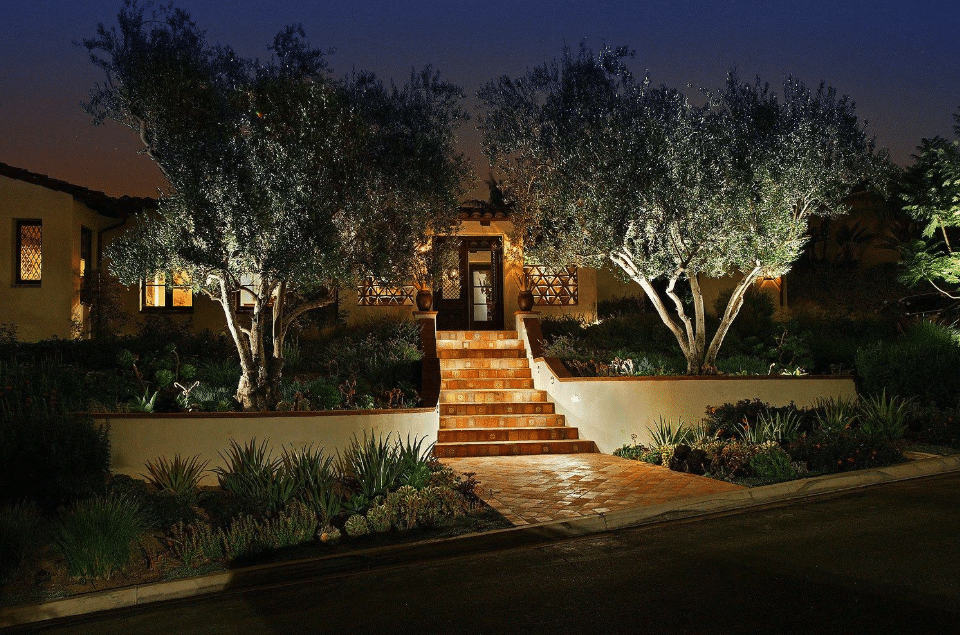
Planting grows. This is the biggest single factor and the one nobody anticipates. A fixture aimed at a six-foot olive is now aimed at the trunk of an eight-foot olive. The canopy that used to hold the light sits above the beam. The effect doesn’t disappear — it just gets a little less beautiful, by an amount too small to notice week to week.
Aim shifts. Landscapers work around fixtures. Irrigation runs. Dogs, kids, wind, a gardener’s rake. A well-set fixture moved four degrees is now grazing a wall it used to wash, or throwing light into a window it used to miss.
Lenses cloud. Near the coast, salt film builds on glass within months. Inland, it’s dust and irrigation mineral spray. Either way output drops and the light goes slightly flat. Because it happens to every fixture at once, the eye adjusts and never registers the change.
Year three to five: where systems separate
By now, two identical systems installed the same week look meaningfully different depending on whether anyone has touched them.
Color drifts apart. LEDs shift as they age, and they don’t all shift at the same rate. Replace one failed fixture with a new one and you’ve introduced a second color temperature into a run that used to match. Do that three or four times over five years and the garden reads as slightly patchwork — again, in a way most people feel rather than see.
Connections corrode. Direct burial connections, poorly made ones especially, take on water. The symptom is usually flicker, or a fixture that works in dry weather and not in wet.
Transformers run out of headroom. Systems get added to. A run designed at seventy percent load is now at ninety-five, and voltage at the far end drops enough that the last three fixtures read dimmer and cooler than the first three.
Fixture finishes weather. Brass patinas, which is usually good and intentional. Aluminum near salt air corrodes, which is not — and it’s one reason the hardware specified on day one matters more on the coast than inland.
None of these are dramatic. Together, over five years, they’re the difference between a property that looks composed at night and one that looks tired.
Three things to check on your own property
Walk out one evening this week and look for three specific things. All three are visible to anyone, no equipment required.
Is anything aimed at a trunk instead of a canopy? That’s a tree that grew. Stand where you normally look at it from and follow the beam up. If the light stops before the branch structure starts, the fixture needs to move back or tilt up — a five-minute fix that most people live with for years.
Do any two fixtures near each other read as different colors? Look at two path lights in the same run, or two uplights on adjacent trees. One warmer, one cooler, one faintly blue. That’s replacement drift, and it compounds every time another fixture is swapped without matching.
Does the far end of a run look dimmer than the near end? Walk the length of a path and watch the fixtures. If the last two or three are noticeably weaker, that’s voltage drop or an overloaded transformer, and unlike the other two it will get worse on its own.
What proper maintenance actually involves
If you find any of the three, they’re all correctable — and all easier to correct now than in three more years.
Real maintenance for a lighting system isn’t a repair visit. It’s closer to a service interval on a car you intend to keep: scheduled, preventative, and mostly about catching drift before it becomes damage.
Done properly it covers re-aiming every fixture at night against the original design intent, cleaning lenses and housings, checking and re-sealing connections before water finds them, verifying voltage across each run and rebalancing as the system has grown, adjusting timing as sunset moves, and replacing at end of life matched to the existing color temperature rather than whatever is on the truck.
And one more that gets done least and matters most: reviewing the design against the landscape as it is now, not as it was on install day. A garden at year five is a different garden. Lighting that was right for it at year one is, by definition, no longer quite right.
Some homeowners handle this themselves, and some prefer someone come do it. We run a program called X-Care for the properties we look after — including systems we didn’t install, which is a more common starting point than people expect. We’ll cover it properly in January.
For now, go look at your trees.